Oswaldo Kato

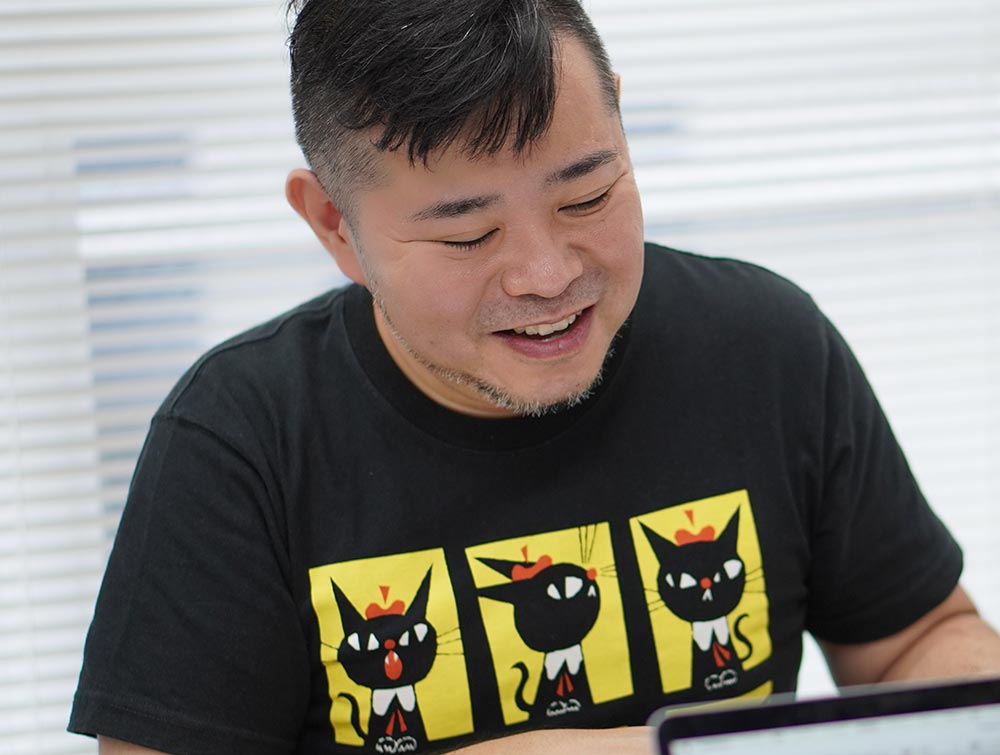
Oswald Kato, originally from São Paulo, Brazil, is known for his fantasy landscapes that evoke a vast view of the world. Not only has he had a long career in commercial fields such as illustrations for Pokémon cards, textbooks, and video works, but he also actively continues to showcase his work at events like Comitia and Comic Market. This time, we had the chance to talk extensively with Oswald about his journey to becoming an illustrator and his approach to creating illustrations!
Making of
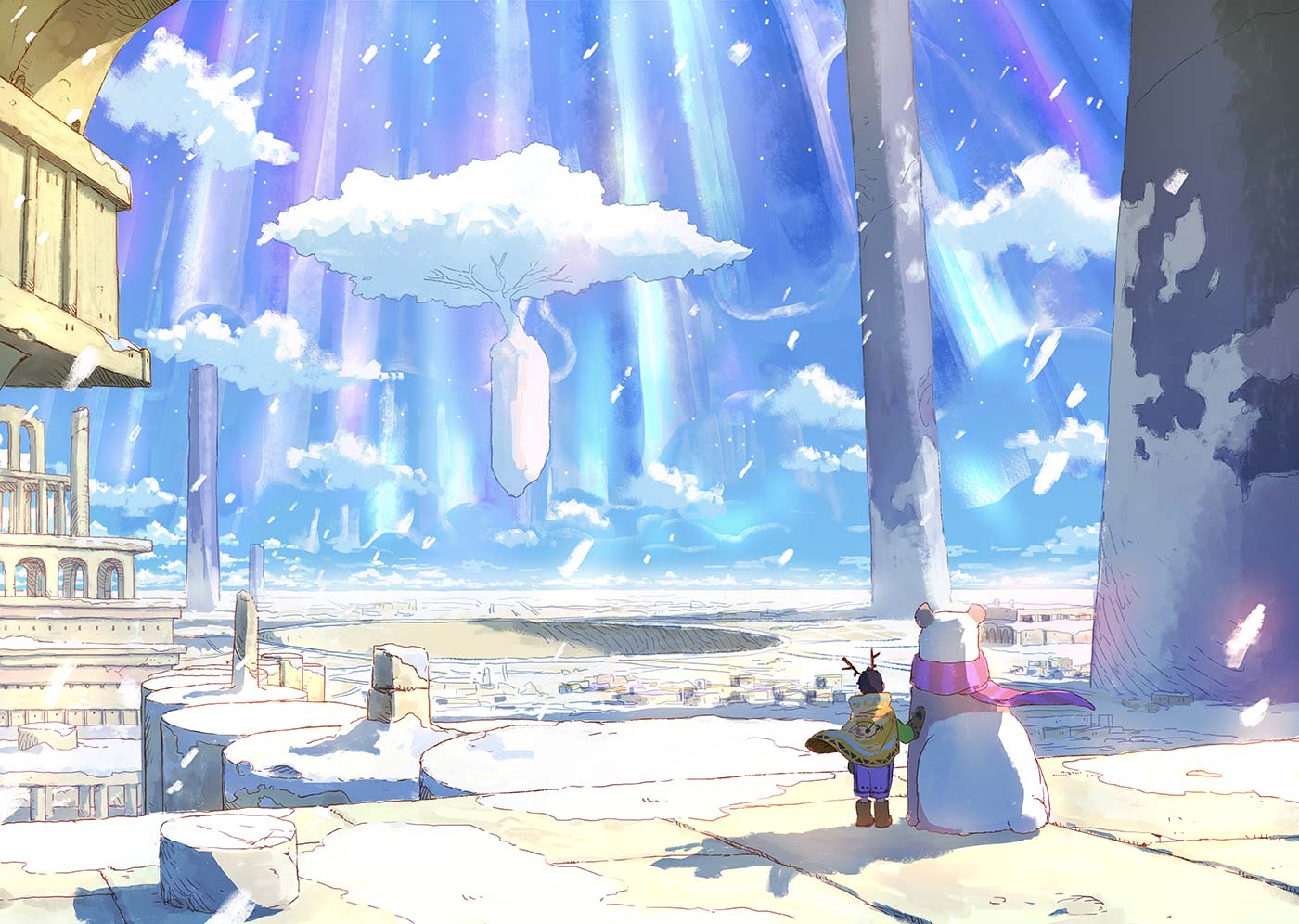
"North Pole"
Rough sketch
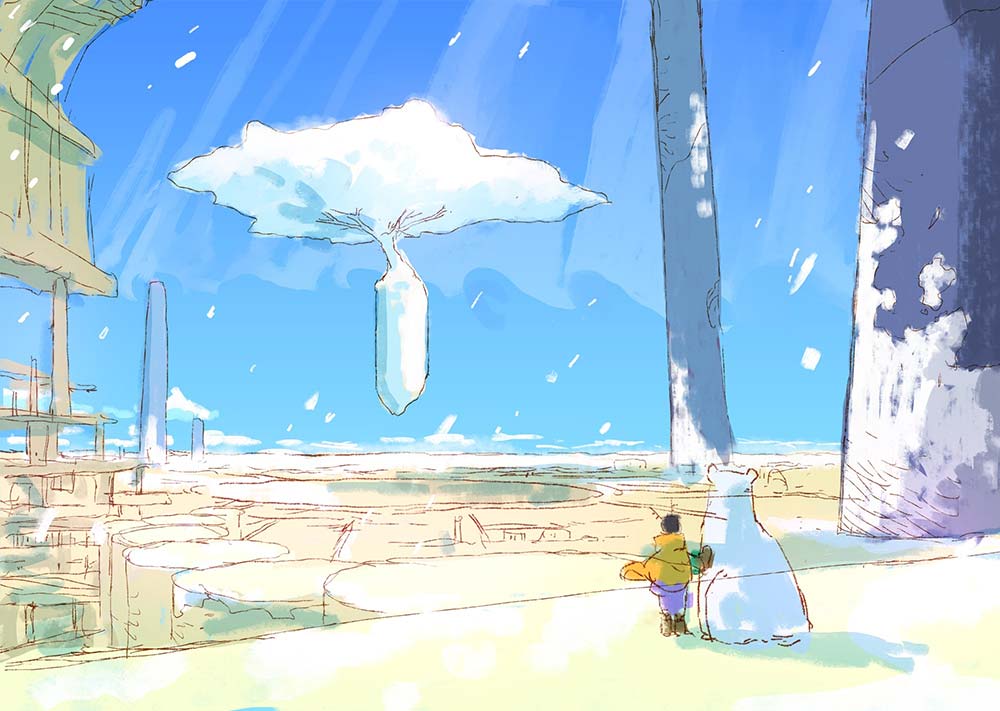
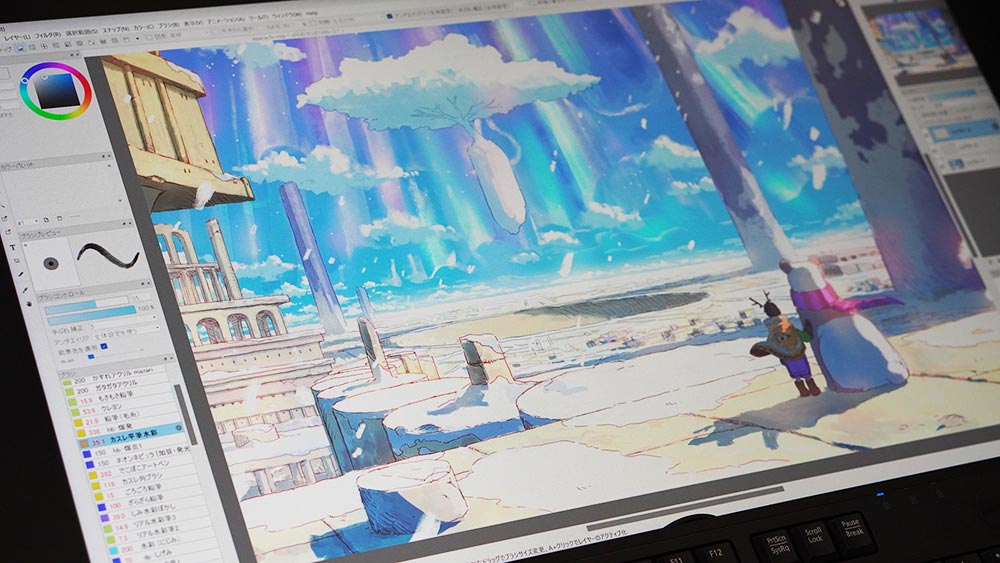
I expanded the theme of "winter landscapes" to include the idea of "cold places" and imagined a world where there was a civilization at the North Pole, then created this artwork.
Rough sketch/Linework
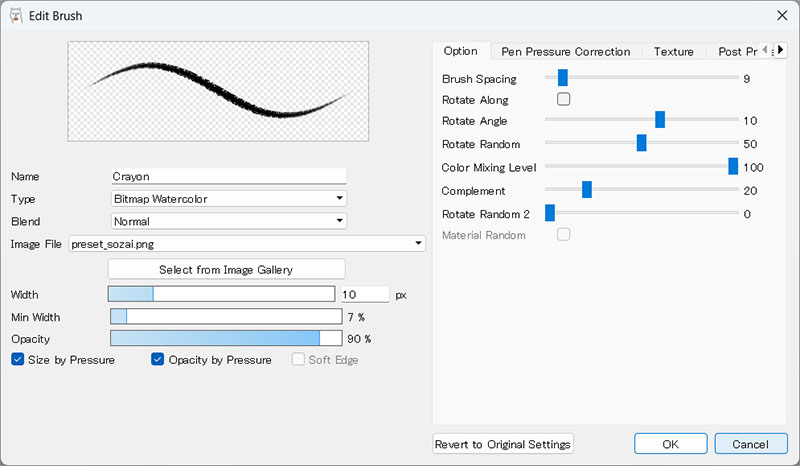
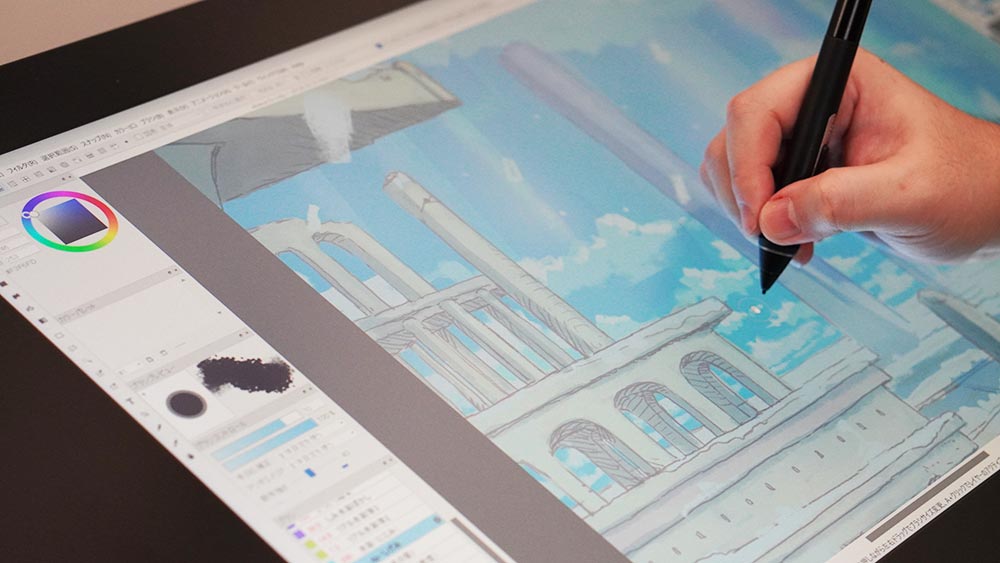
While placing colors during the rough sketch stage, I look for a composition that fits the image. After that, I refine the rough lines and draw the line art using a brown "crayon."
Mainly used brushes
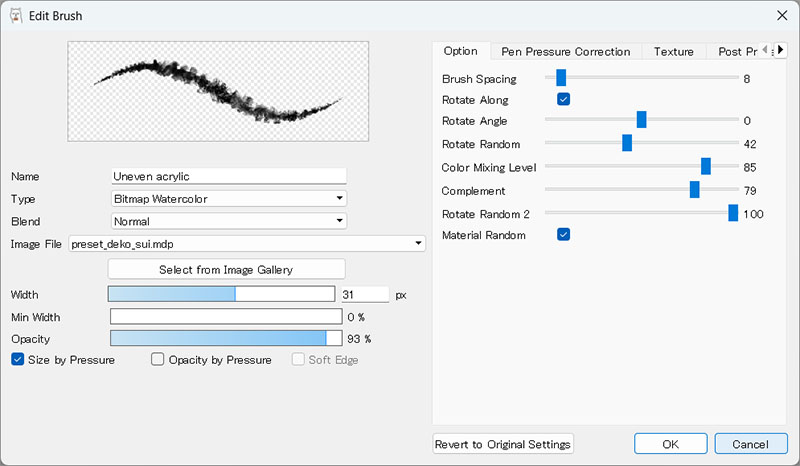
"Uneven acrylic"
"Crayon"
Coloring
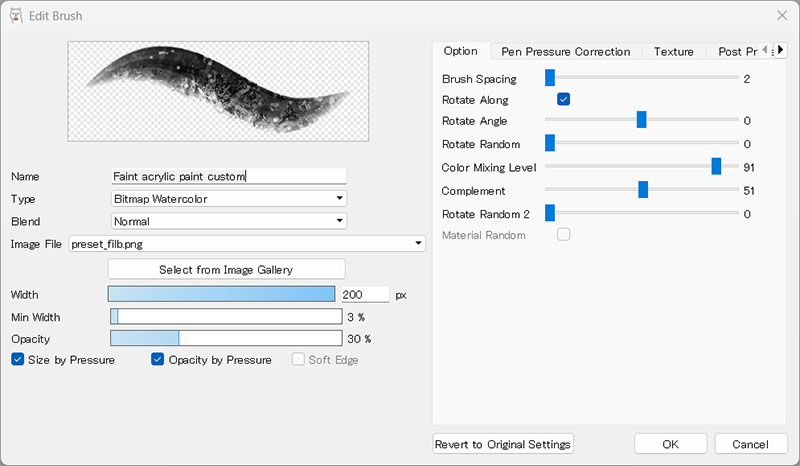
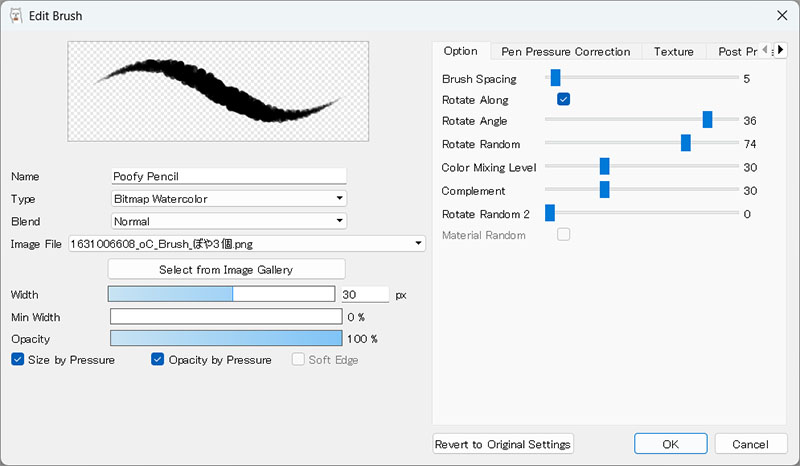
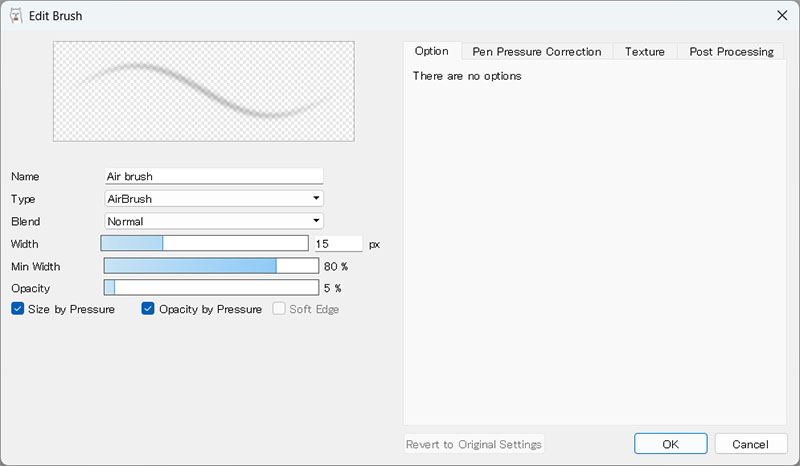
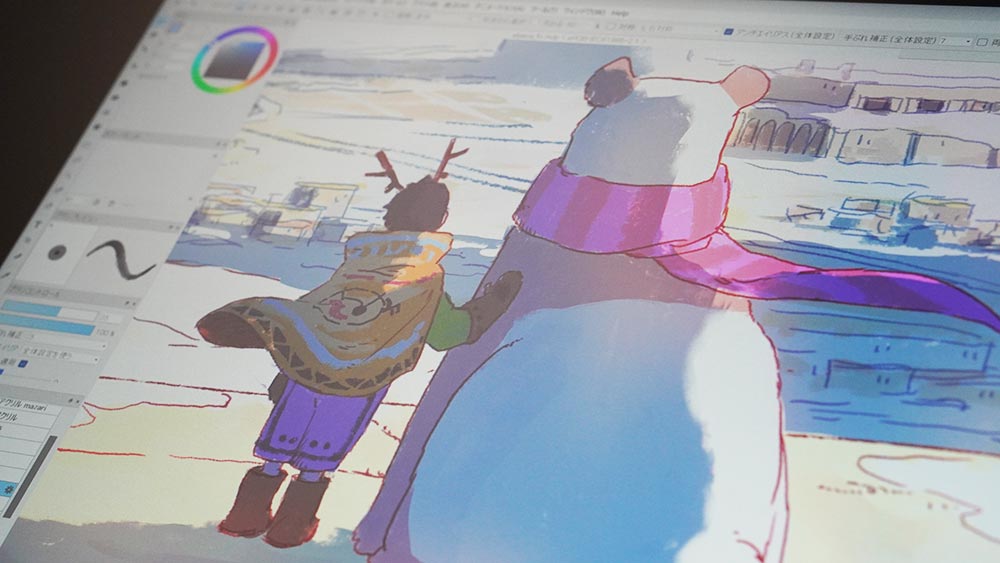
I refine the details based on the rough sketch. I mainly use the regular "Faint acrylic paint" and a custom "Faint acrylic paint mazari" which makes easier to blend colors with, and paint with a "Poofy pencil" for the finer areas. To create a smooth gradient for the aurora, I first draw it in monochrome and then change the blending mode to "Screen." Finally, I add light effects using an "Airbrush" on an "Add/Glow" layer.
Mainly used brushes
"Faint acrylic paint"
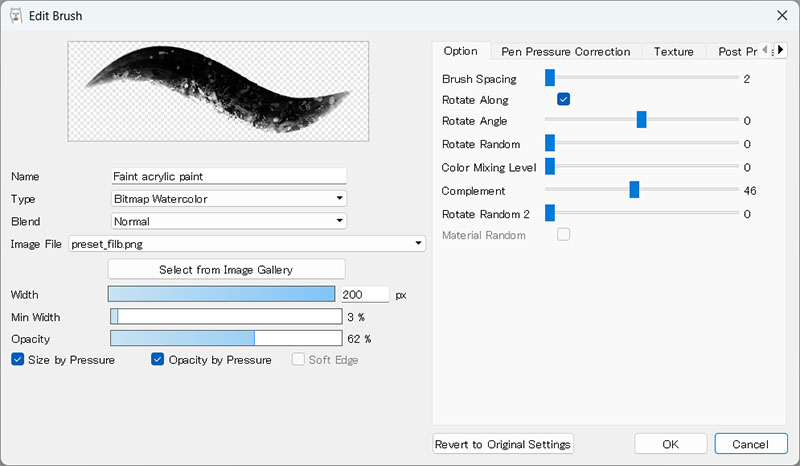
"Faint acrylic paint (Custom)"
"Poofy Pencil"
"Air Brush"
Oswaldo Kato
Interview
My honest impression was, "Why is it free?"
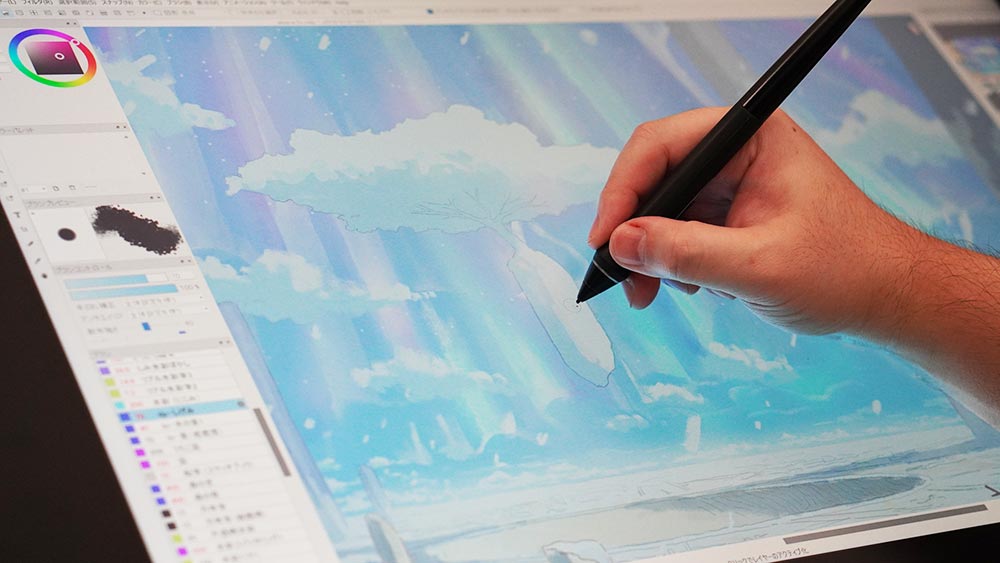
— The first question is about FireAlpaca. How was your experience using FireAlpaca?
First of all, I was surprised. In fact, my honest reaction was, "Why is this free?" It's not that the quality is low because it's free. I thought it was fully functional and high quality enough to be used for work. The free version already has so many features that I couldn't even imagine how impressive the paid version would be.
— Were there any features you found particularly useful or you would highly recommend to others?
There weren’t any outstanding features in terms of tools or special functions, but it had all the necessary features for work, and I felt like you could draw any kind of illustration if you wanted to. The support for CMYK in particular is great. When dealing with printed materials for work, it’s tough to manage without at least being able to check in CMYK mode, but many free programs don’t offer that.
— Next, moving on to questions about the illustration you created this time. Please tell us about what you focused on, any particular details you were careful about, or the feelings you put into the illustration you were commissioned to create.
Having been born and raised in an environment without a typical winter, the theme of "winter scenes" was initially hard for me to visualize, so I tried to avoid stereotypical winter landscapes. I thought it might be okay to broaden the concept beyond just "winter" to include the idea of "cold places." With that in mind, I imagined a scenario where there is a continent at the North Pole with a civilization, and I sprinkled in impossible scenes like auroras at midday and snow falling on a clear day. I wanted to create a mysterious and unusual atmosphere through these elements.
— Please tell us about the brushes you used for this illustration.
I often use brushes that allow me to paint with a feel close to the oil painting I originally did, ones that easily show brush strokes. So this time as well, I customized such brushes to be able to create gradients directly on the artwork. As for pencils, I prefer those with texture rather than smooth ones, so I use special "Poofy pencil" and "Crayon" for the linework.
— Roughly how long did it take you to complete this illustration?
The rough draft took just under an hour, and I think it took about 5 to 6 hours to complete from the rough draft stage.
I plan to create sketches with the goal of coming up with at least 100 ideas.
— Now moving on to questions about you as an illustrator. First, please tell us about your work environment.
The PC I’m currently using is a gaming PC from Mouse Computer with about 32GB of RAM. Originally, I had it custom-built from the case up, but lately, when looking for good cost-performance in graphics, gaming PCs have been the better choice. Another advantage is that if it breaks down during work, you can easily replace it right away since they’re sold everywhere nowadays.
As for software, I use Clip Studio Paint about half the time on my PC and Procreate about half the time on my iPad for work. I’ve been using a Wacom medium-sized pen tablet for around 10 years, and my monitor is a single 27-inch EIZO, where I display reference materials on about one-third of the screen. Additionally, I use a special item - a designer chair called the “Toy Chair.” It’s a hard chair, but surprisingly comfortable. It’s originally meant for outdoor use and is very durable, so I’ve been using it for about 10 years now.
— Please tell us about your illustration history. When did you start drawing, and how did your style evolve over time?
I started drawing before I even entered elementary school, but I vaguely began thinking about making it my career around fourth grade. In high school, I joined the art club and started oil painting, which made me want to go to an art college. However, since I attended a regular academic high school, there wasn’t much guidance available for career paths, and I only learned about art prep schools after the summer of my senior year, so it was too late. I ended up researching on my own and enrolled at Tokyo Polytechnic University.
Around that time, I made friends who loved movies, which sparked my interest in video and film. At Tokyo Polytechnic University, I studied visual media. In my junior year, I joined a seminar focused on digital media, which was rare back then, and that’s when I first started drawing on a computer using a pen tablet. I was also working part-time at a web design company, and when I mentioned that I could draw, I received my first paid commission. Since then, I’ve continued taking freelance jobs.
After graduating, I stayed at the university for another year as a research student while taking on video-related work. I also worked as an assistant professor at a university in Nagoya for about four years. After returning to Tokyo, I worked in video production for over ten years. However, when pitching video projects, I found that manga conveyed ideas more effectively, so I started drawing manga. I began submitting the black-and-white manga I created to events like Comitia. At those events, some buyers asked if I had any color illustrations, so I started creating color artwork and posting it on social media. Gradually, illustration work became my main focus.
— What kind of illustrations do you like? It doesn’t have to be related to your own artistic goals.
I'm not really interested in the typical "moe" style of art; I tend to prefer pieces that include landscapes. Since I originally work with video, I like shots that feel like a single frame from a film rather than just standalone illustrations. When I draw myself, I imagine capturing a part of a moving image, so people often say my approach isn’t typical of an artist. I'm also drawn to works with skillful stylization or those that have a spark of creative ideas. In terms of classical painting, I like the expressions found in works by René Magritte and Giorgio de Chirico. Beyond that, I enjoy French bandes dessinées like Moebius, as well as movie posters and collections of propaganda art.
— What are some of your favorite works? (illustrations, comics, anime, novels, movies, or anything)
When it comes to manga, I like unique works like "Nausicaä of the Valley of the Wind" and Daijiro Morohoshi's creations. For movies, I enjoy those with distinctive worlds, such as Jean-Pierre Jeunet's "The City of Lost Children" and Tarsem Singh's "The Fall." As for games, I'm a big fan of "ICO," "Shadow of the Colossus," the "Legend of Zelda" series, the "MOTHER" series, "UNDERTALE," and also "Katamari-Damacy."
— What do you keep in mind when coming up with ideas before working on an illustration?
The key is to produce a large number of ideas. I aim to come up with at least 100 sketches. Usually, I find what I’m looking for before reaching 100. Besides that, I’m always thinking about whether something can be used in an illustration as I look at landscapes and artworks.
— What do you keep in mind in order to improve your skills?
Personally, I think improvement and growth are just results, so I don’t really have anything I consciously focus on. However, when I’ve asked other artists around me, one thing that clearly stands out as common is that they draw a lot, so I believe that’s important. You can study things like sketching and color use as the need arises while you’re working on your art. It might depend on the person, but if you try to draw just to improve, it can get boring, so I think it’s better to draw however you like. Some people do find motivation in getting better, so I think it’s a good idea to figure out which type you are before deciding what to do.
— What do you keep in mind when working on a paid illustration work?
It's all about communication. Ideally, we want to deliver something that exceeds what the client is asking for, so I pay close attention to what they want and who they are as a person. Sometimes, even if they say "That sounds good" verbally, they might feel differently inside. When communicating through text or online, timing delays can cause misunderstandings, so I try to interact face-to-face as much as possible to better gauge their true needs and pick up on what they're really looking for. On top of that, I often look at popular works to help share and align our vision.
— Please tell us any difficult experiences or struggles while working on an illustration.
The hardest part was that, in the beginning, I didn’t get any work assigned to me by name, so I just had to produce a large volume of work. There was even a month when I drew 80 cuts, so it was often physically demanding. One of my struggles is that I draw whatever comes to mind first, so sometimes I want to draw but don’t have anything specific I want to draw. Also, I feel like my art lacks a distinct personality, so when I see artists with clear, recognizable styles, I can’t help but feel a bit envious. Since I’m not confident in my style, my approach might be to rely on quirky, unconventional twists to make it work.
— Please tell us your future goals or challenges you’d like to take on?
Right now, I’m really into drawing manga. I’ve drawn before, but I never thought about making it my job. However, if possible, I’d like to try turning it into a career. I’m not too particular about how my work gets published, and lately, I’ve even been thinking that picture books might be an option too.
Do you want to become an artist, or do you want to work for a client?
— Lastly, please comment if you have any advise to those who want to become an illustrator.
I am often asked for advice about career paths, but I think a lot of people tend to confuse whether they want to become an independent artist or do client work. I believe it’s important to clarify that distinction. Originally, illustration was a job where you created images based on designs or requests from others, but recently that line has become very blurred, and there’s a trend where expressing one’s individuality as an artist is seen as superior. This is especially evident in so-called “bishoujo” (pretty girl) content. However, I think the strength of that genre ultimately comes from the combination of individual talent, the client’s demands, and the cultural context all aligning perfectly.
A recent topic in the illustrator community is the shortage of skilled people. Many want to draw girls, but according to someone from an advertising agency, there are few who can create fully finished illustrations as artwork. So, I think if you aim in that direction, there will be plenty of work available. If you want to stand out as an individual and become popular, you have to be prepared to live like a painter. But if you want to make a living from drawing, I believe your future is better if you focus on honing your skills as an illustrator who can do client work. If you just want to satisfy your need for approval, it’s also an option to earn money through another job and share your work from there. By the way, I’m able to work because I’m good at drawing, but the only reason I draw is to fulfill my desire for approval.
— That concludes today’s interview. Thank you very much!